Intro:
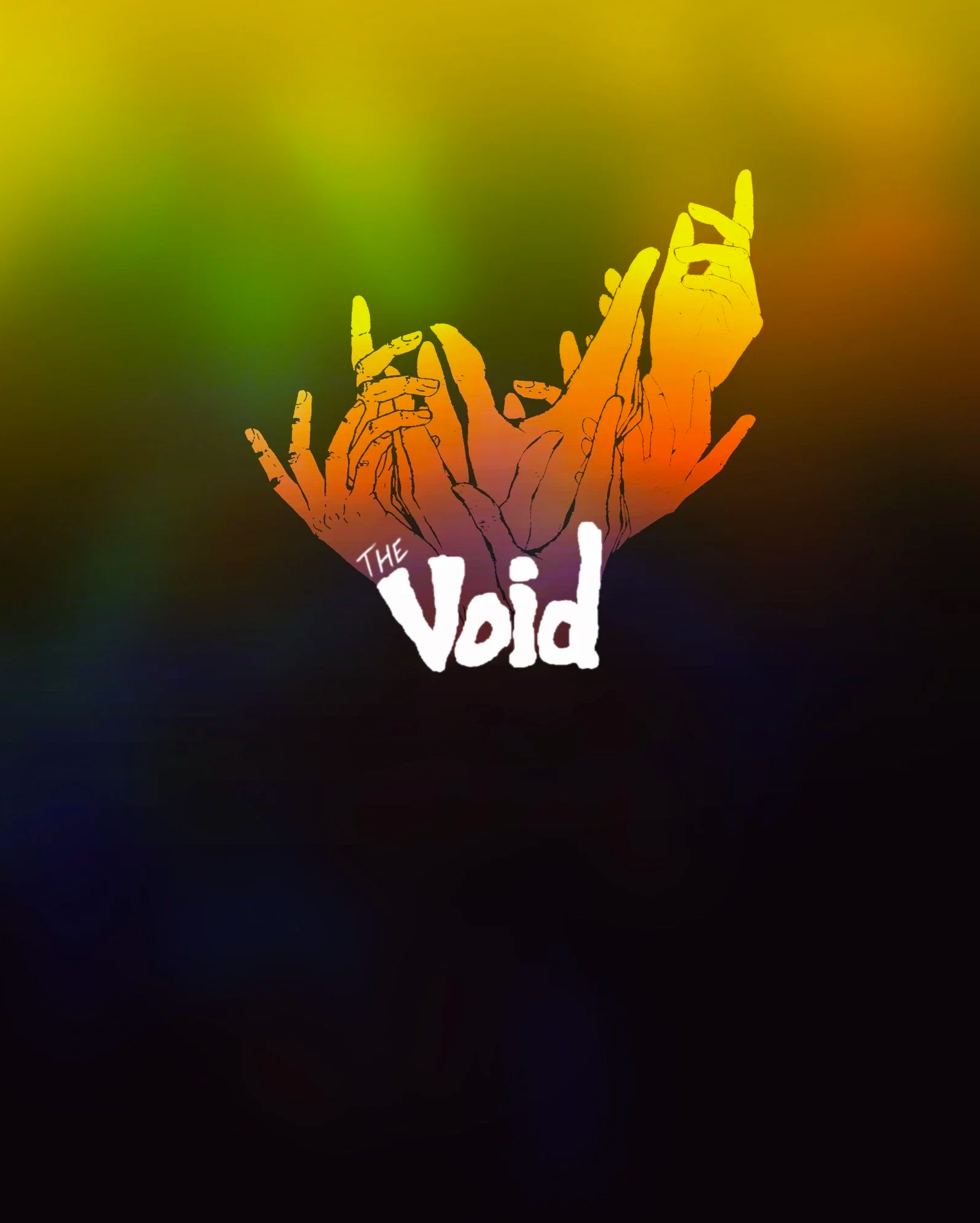
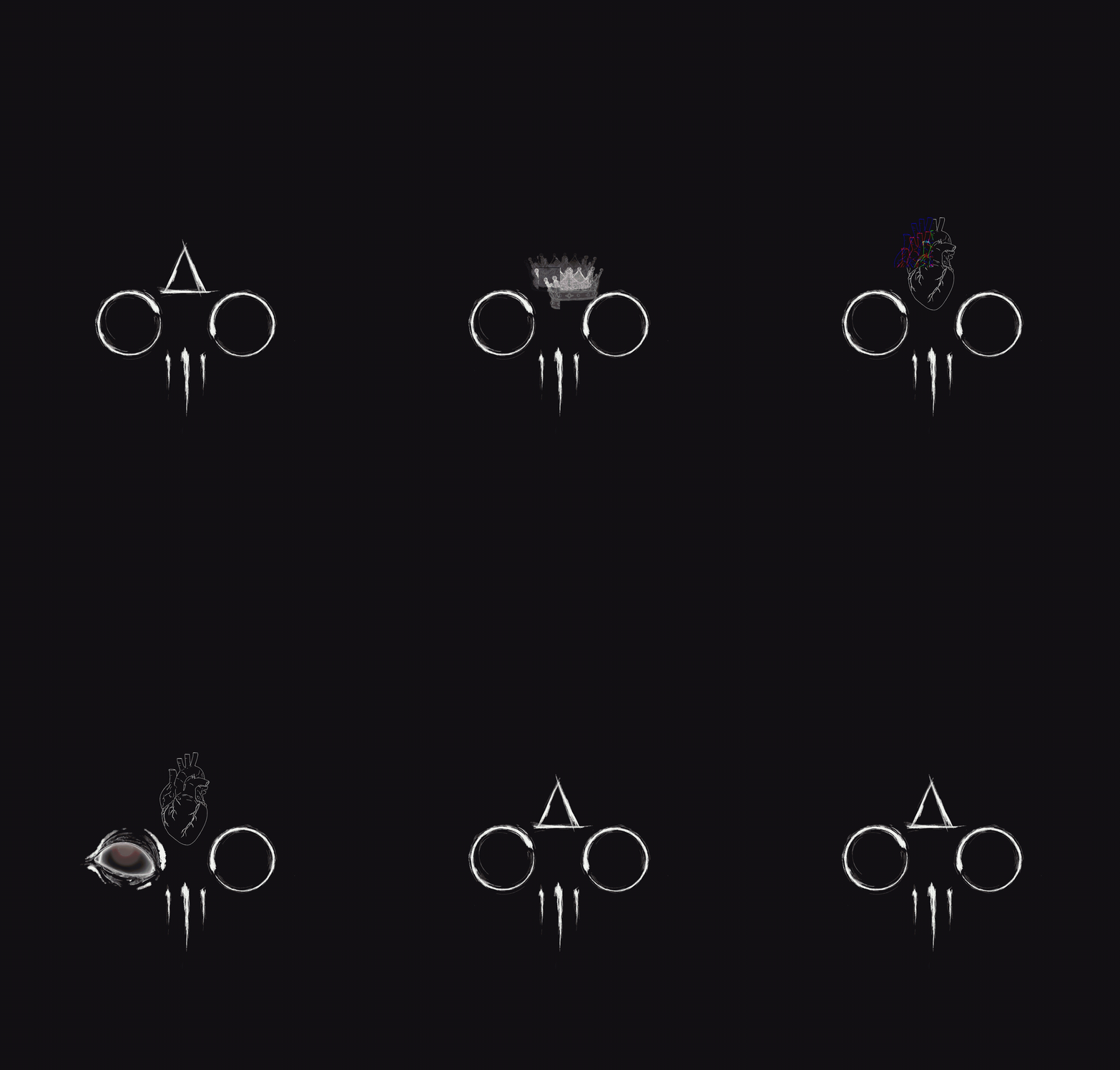
The Void is my personal interpretation of living with depression and anxiety. Each piece in this collection is inspired by moments, thoughts, and emotional states that surface during recurring bouts with the Void. Rather than isolated works, these pieces function as fragments of a larger cycle, capturing the phases that emerge while under the weight of sustained internal conflict.
This body of work documents the quiet, often unseen progression of depression and the moments of denial, acceptance, and survival that rarely happen in a straight line. The Void does not offer resolution or answers. Instead, it exists as a record of what it feels like to endure, to be altered, and to continue.
Stare
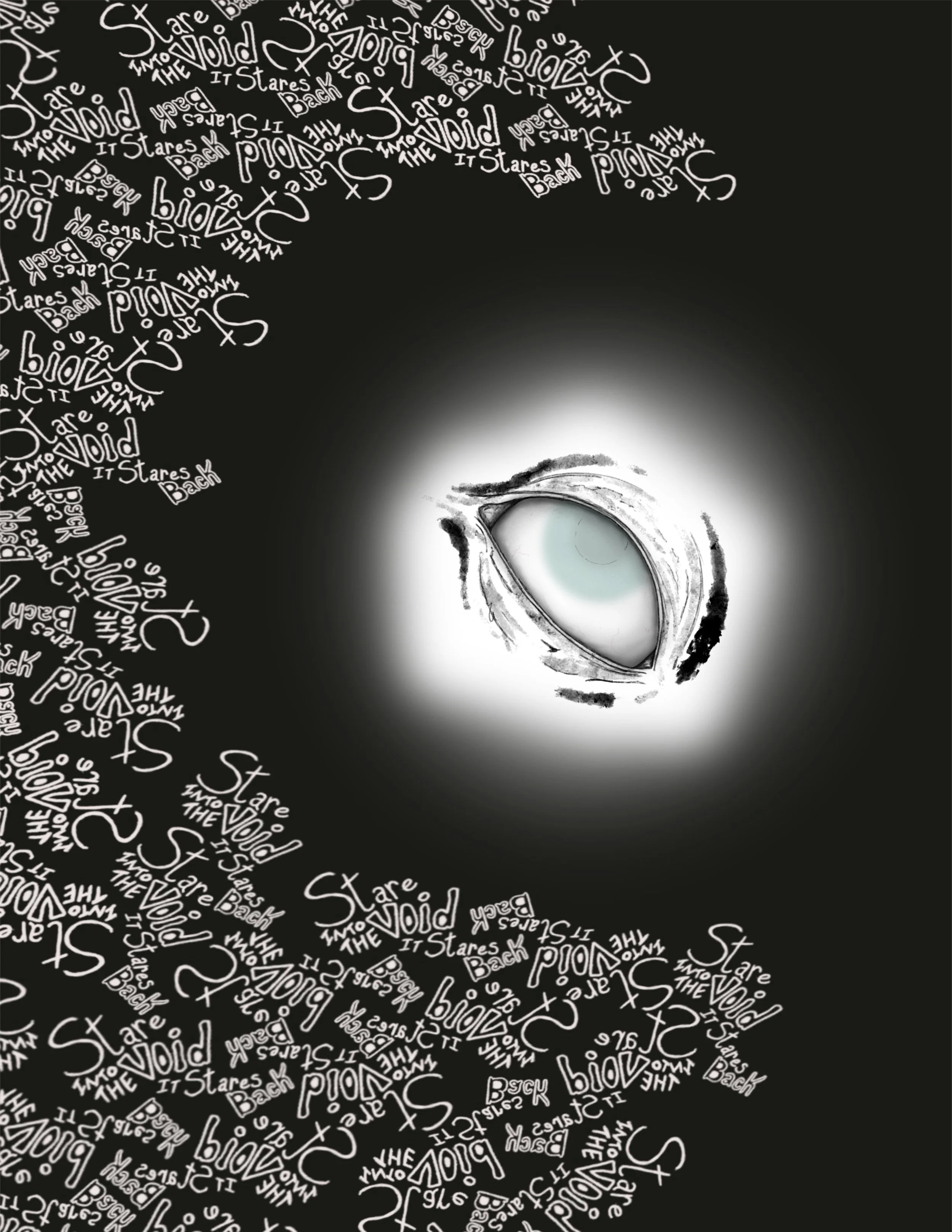
“Stare into the Void, it stares back”
Stare invites the viewer into a quiet confrontation with the unseen. Somewhere from the dark, you feel something staring at you. It does not look through you so much as it waits.
The Void here is not a place but a presence. An origin point for doubt, heaviness, and quiet despair. As you meet its gaze, you realize that once these emotions surface, they acknowledge you in return. Stare captures the unsettling moment of recognition, when one realizes that the darkness within may not be passive.
Anxiety
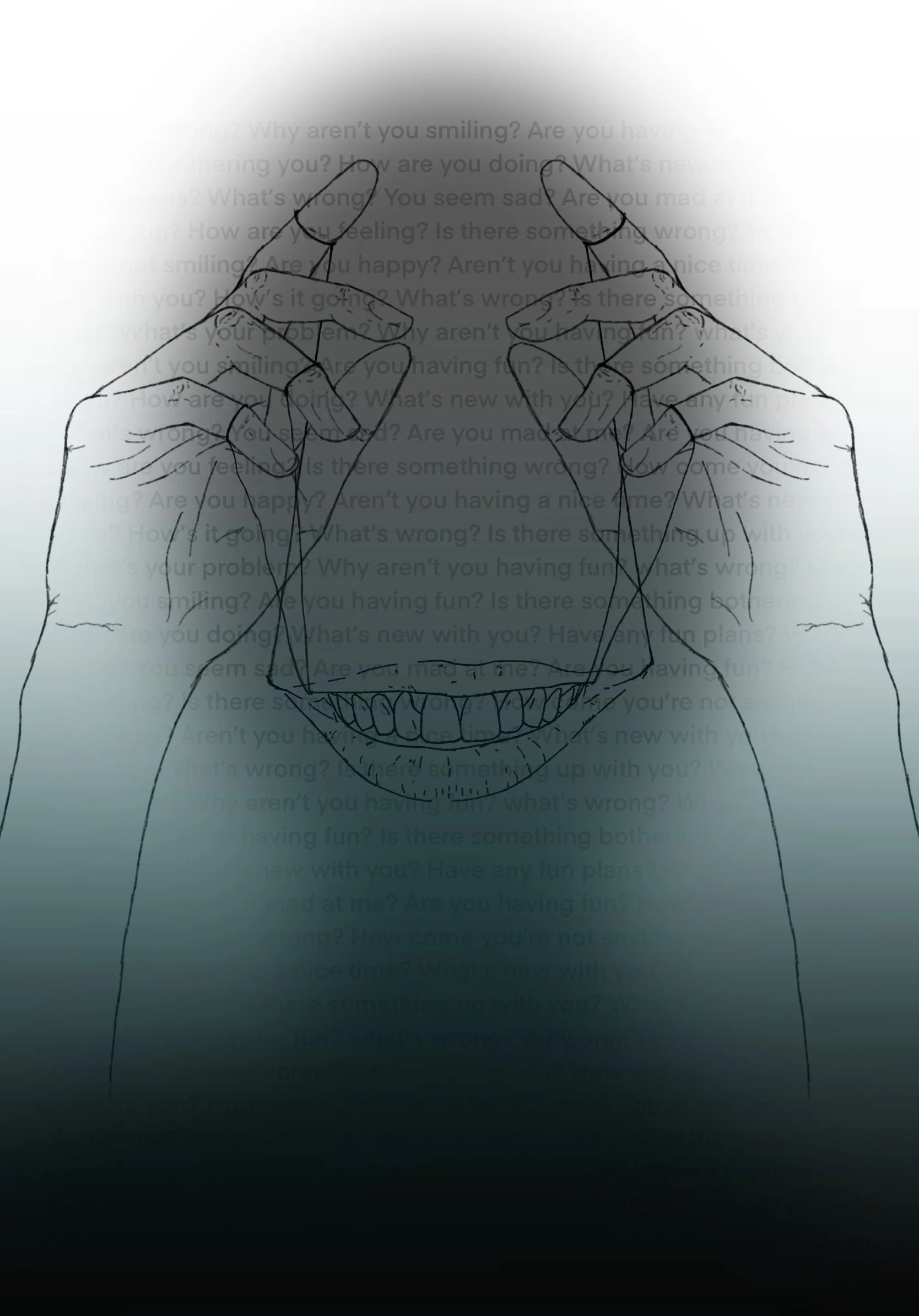
Anxiety captures the exhausting performance of appearing whole while quietly unraveling beneath the surface. Two hands puppeteer the smile that hangs unnaturally in the foreground. It is held in place not by joy, but by pressure and the unspoken demand to look fine, to reassure, and convince.
Behind it, a shadowy figure recedes into itself, stripped of detail and identity. This loss of definition speaks to how hiding one’s true feelings slowly erodes a sense of self, until what remains is only a silhouette.
The piece reflects the tension between visibility and vulnerability. The forced smile becomes a barrier, protecting the inner self while simultaneously trapping it. Anxiety gives form to the quiet panic of being seen too much and not enough at the same time.
Reach
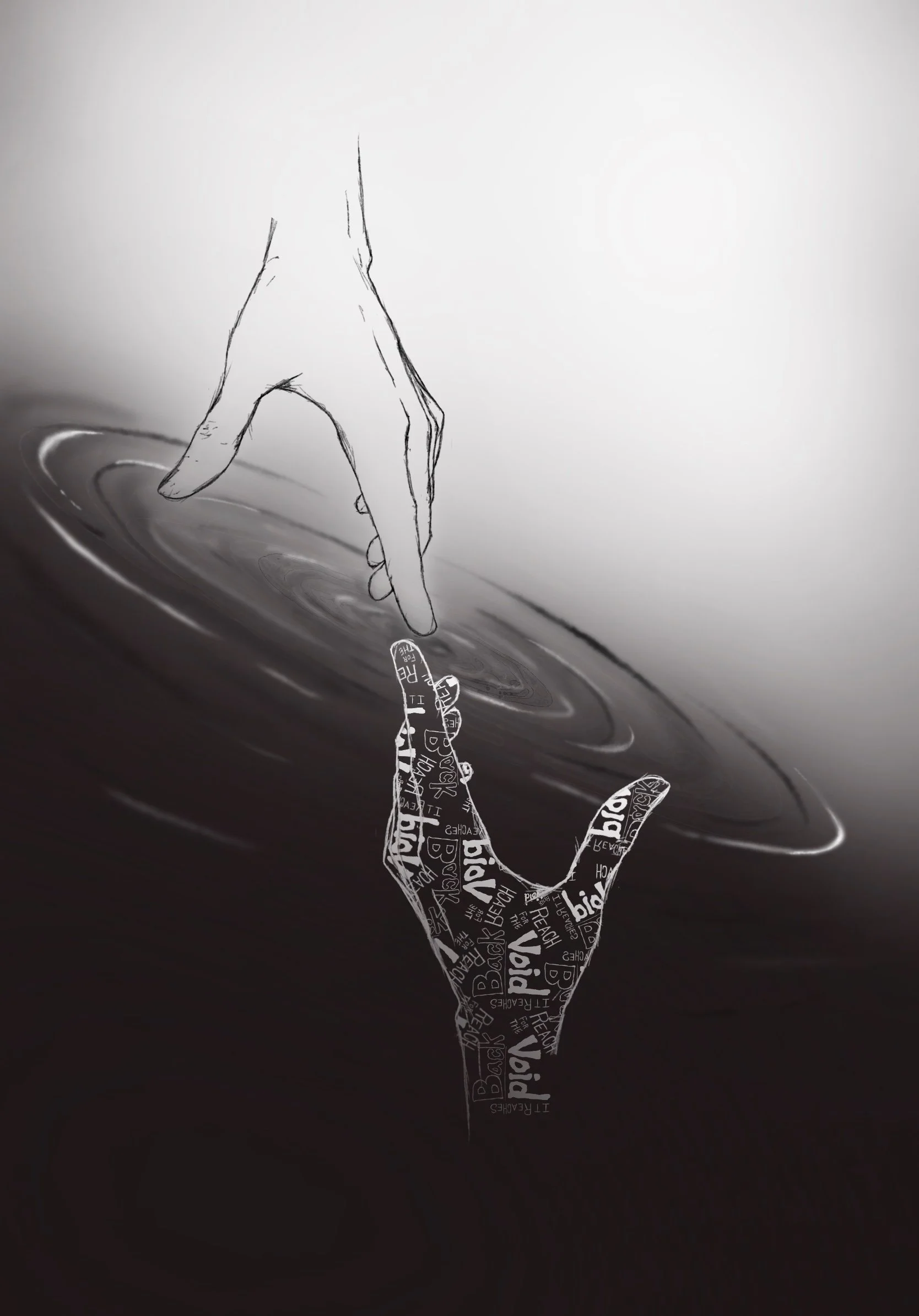
“Reach for the Void, it reaches back”
Reach captures the fragile moment just before contact. A pale hand extends downward, its touch barely breaking the surface of an unknown plane, sending out soft ripples. The gesture is almost curious. An action that could be mistaken for hope, or for a search for grounding.
From below, a darker reflection rises to meet it. Formed from shadow, it transforms the act into a sinister invitation.
The piece speaks to the dangerous familiarity of depressive thought patterns, when darkness begins to feel comforting, predictable, even safe. The ripple marks the instant of recognition: the realization that you may be mistaking something. Reach warns that the Void is not empty or indifferent. It responds, and once it takes your hand, it may be reluctant to let go.
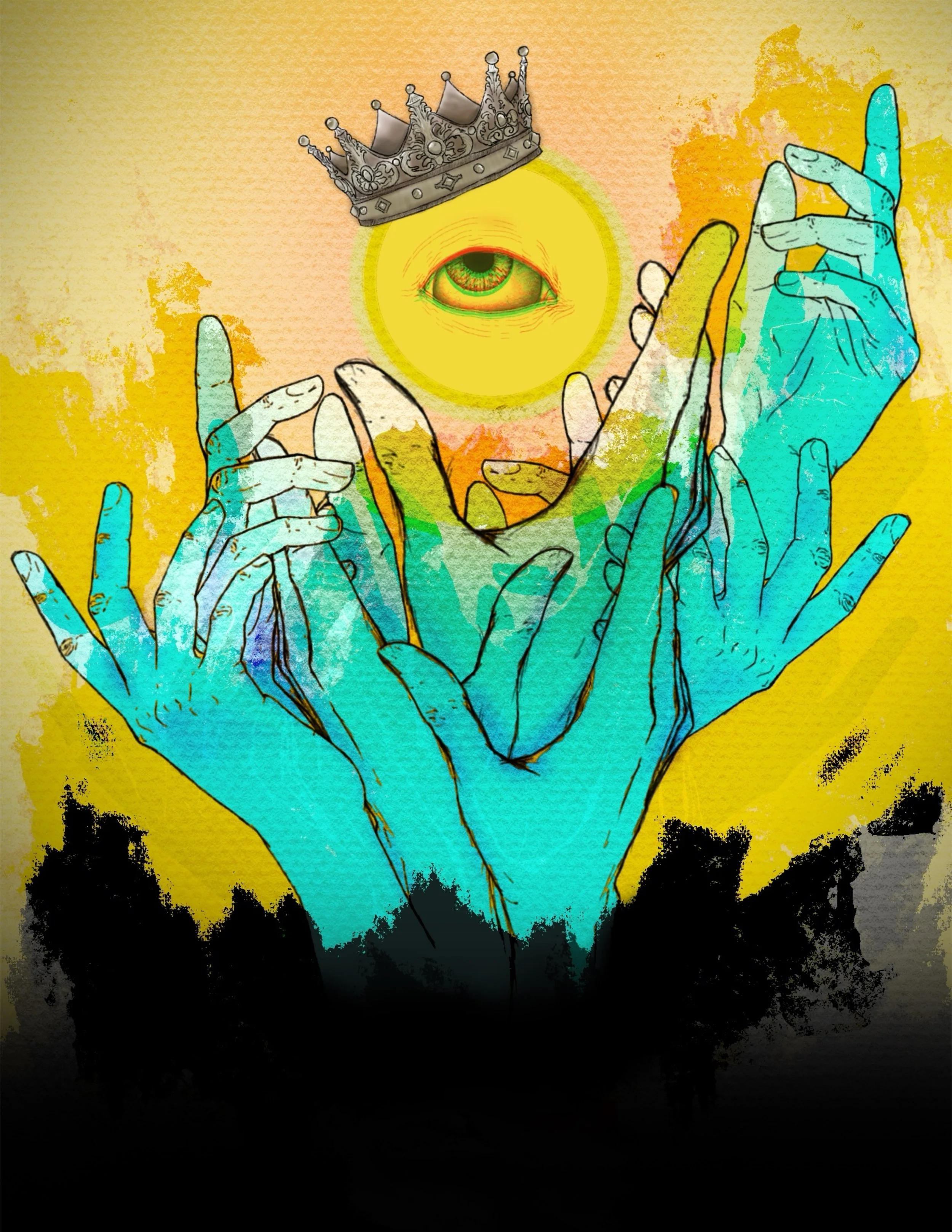
Precipice
Precipice captures the final, breath-held moment before descent. From a shadowed mass, a multitude of hands surge upward, frantic and urgent in their reach. They emerge from the Void itself, no longer distant or abstract, but active and consuming. Their movement suggests both desperation and inevitability, as if the darkness has found momentum.
Above them floats a single crowned eye, radiant against the surrounding chaos. The eye symbolizes identity, self-awareness, clarity, and inner truth. The crown rests as a fragile emblem of control, worth, and hard-won stability. It hovers just beyond grasp, suspended in a state of tension that feels temporary and vulnerable.
The composition freezes the instant where everything could still be saved yet already feels lost. Precipice embodies the terrifying proximity of surrender: the realization that the Void is no longer something you observe or resist, but something reaching for what defines you. It is the threshold where negative and depressive emotions threaten to overtake the self, stripping away control and pulling the viewer into darkness. One moment before the fall.
Lend
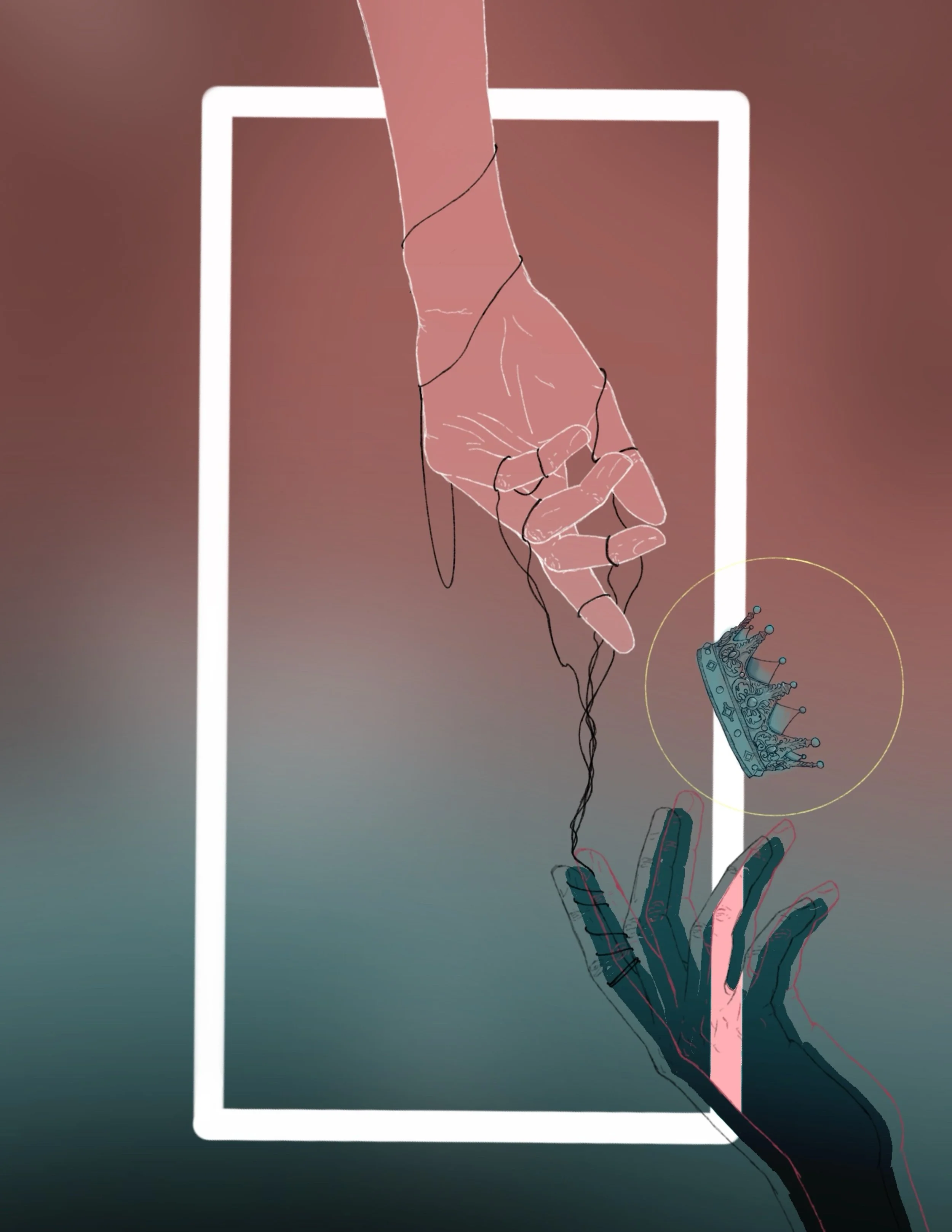
Lend reveals the quiet transfer of control that often goes unnoticed. A pale hand hovers above, fingers loosening as a dulled crown slips from its grasp. Once a symbol of identity, agency, and self-worth, the crown here has lost its radiance. The act of release appears passive, as though the loss has already been accepted.
Below, a darker hand waits to receive it. Thin strings wind from its fingers upward, subtly tethering the lighter hand above. This connection exposes the imbalance of power: what appears to be a choice is instead a guided motion. The darker hand’s doubled outlines and misaligned colors distort its form, suggesting deception—the Void presenting itself as something familiar, even helpful, while quietly exerting control.
Lend embodies the unsettling realization that depression does not always take, it convinces. It persuades you to hand over pieces of yourself willingly, until you discover that what you thought you were letting go of was already being pulled from you.
Melt
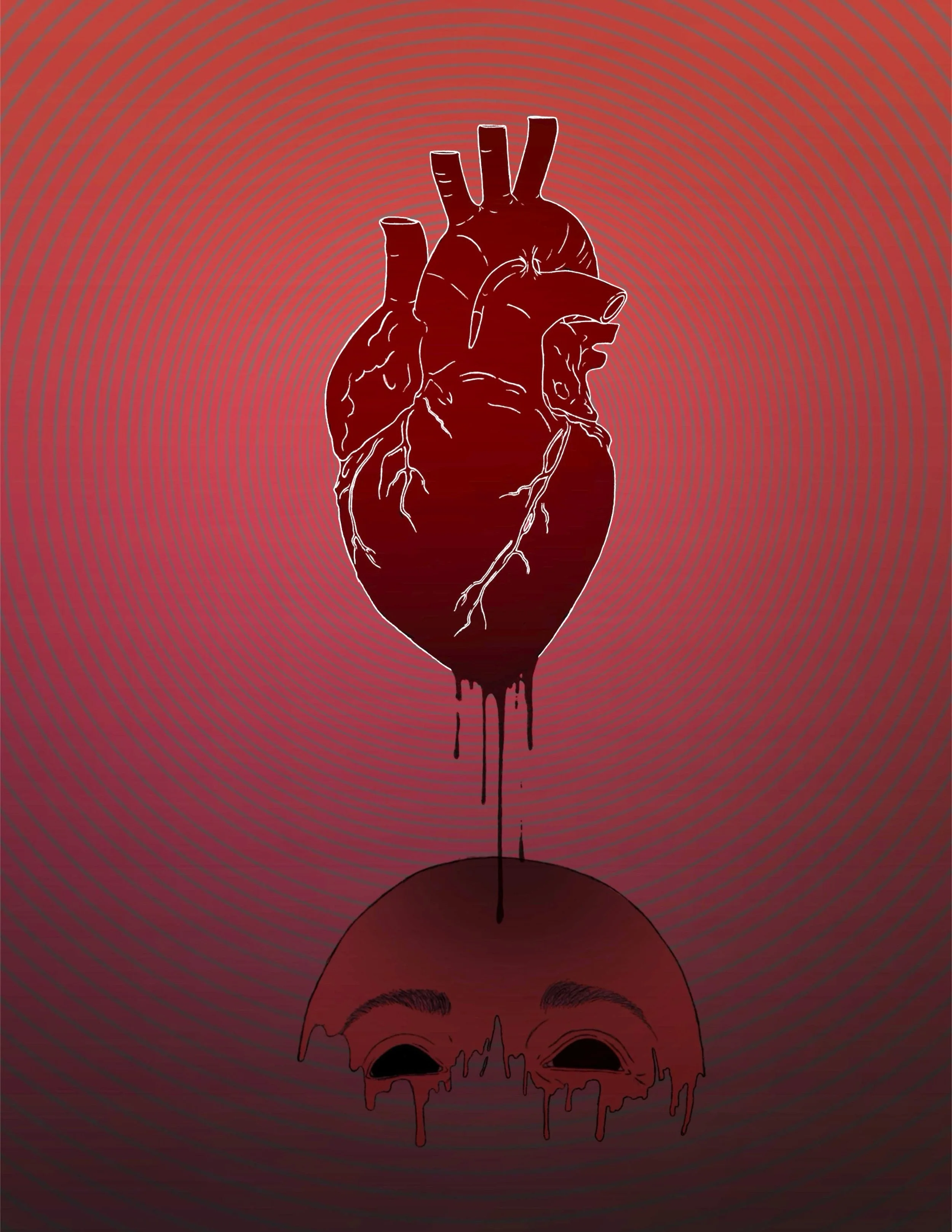
Melt captures transformation as both loss and creation. A heart hangs suspended, heavy and exposed, its form beginning to soften and drip as if it can no longer contain itself. What falls from it is not simply matter, but identity. Each drop marking the slow erosion of what once felt solid and familiar.
From beneath the dripping heart, a face begins to surface. It emerges quietly, almost accidentally, shaped by what is being shed above it. This new form is not fully defined, suggesting uncertainty and disorientation, as though the self is being rewritten without consent. The Void here acts as a catalyst, dissolving the old while giving rise to something unfamiliar in its place.
The piece reflects the unsettling realization that prolonged immersion in darkness does not leave you unchanged. Melt speaks to the gradual nature of this transformation. The way you don’t notice yourself slipping away until pieces of you have already become something else. It is a meditation on losing oneself in the Void, and on the quiet fear that what emerges afterward may no longer feel like you.
Hide
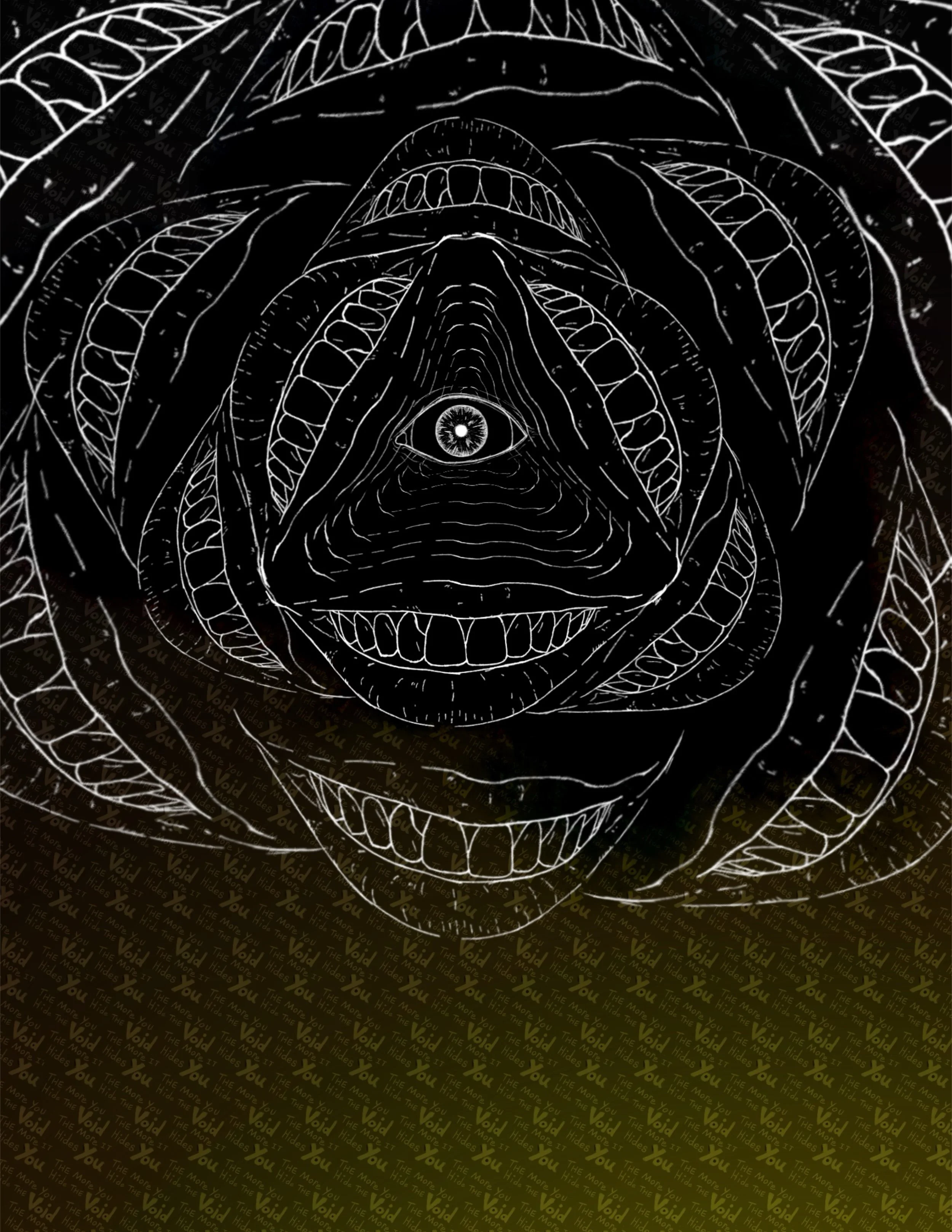
“The more you hide the Void, the more it hides you”
Hide exposes the cost of concealment. At its center, a single startled eye peers outward, alert and vulnerable, caught in a moment of realization. Surrounding it are layers of false smiles, repeated and enclosing, forming a mask that is meant to protect but instead suffocates. These smiles are not expressions of joy, they are barriers.
Beneath the imagery, the repeated phrase “The more you hide the Void, the more it hides you” hums quietly through the background, reinforcing the cycle of suppression. Each attempt to bury pain only deepens its hold, allowing the Void to seep further into one’s sense of self. What begins as hiding emotions from others becomes hiding from oneself.
The piece speaks to the erosion of identity that follows prolonged denial. As the smiles accumulate, the eye—the last marker of authenticity—struggles to remain visible. Hide captures the fear that after hiding for too long, there may be nothing left to uncover, only the unsettling realization that the Void has not been concealed but has quietly taken your place.
Become
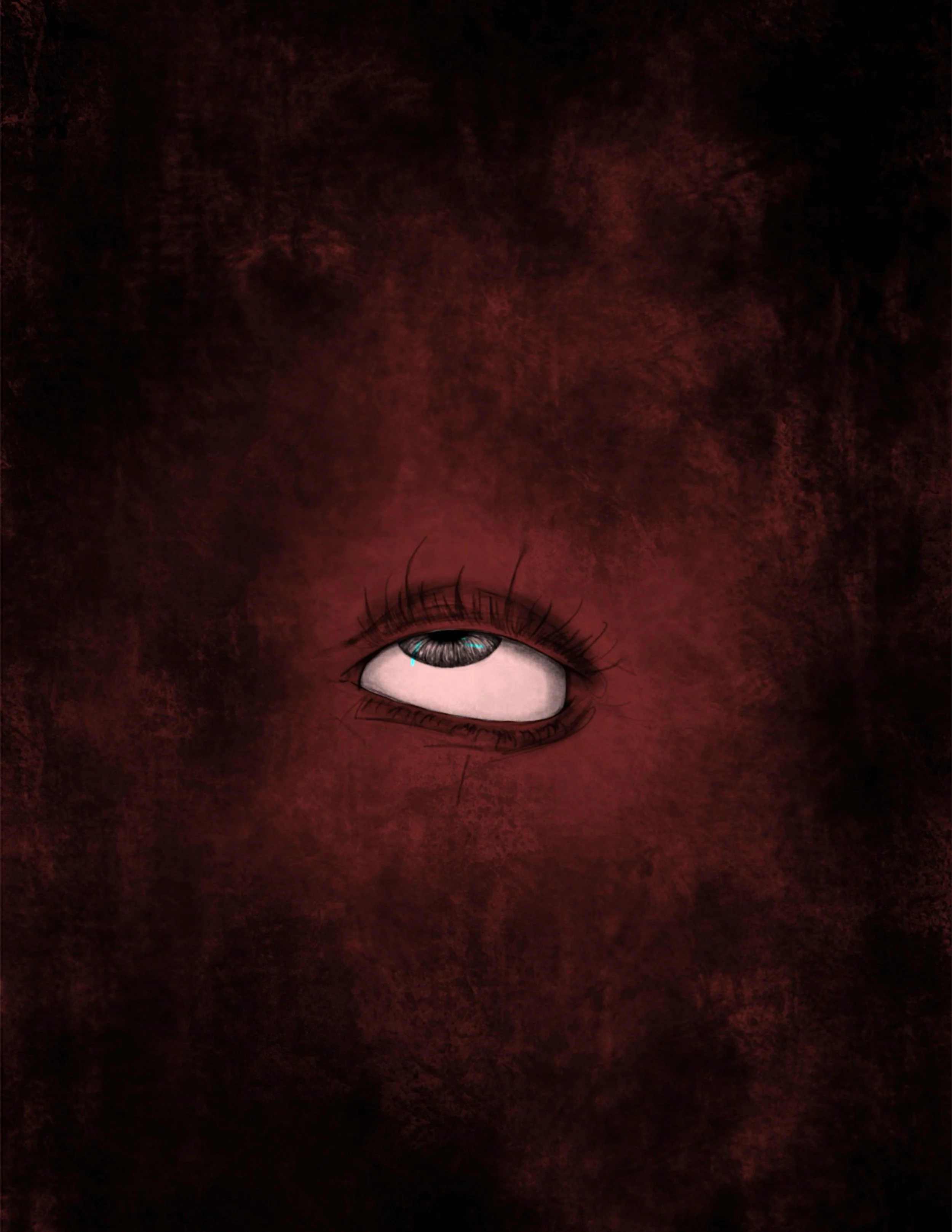
Become is the quiet aftermath of surrender. At its center rests a single, unenthused eye. Open, but no longer searching. It does not resist the darkness surrounding it, nor does it react to it. Instead, it exists within a dense, consuming haze, as though the boundary between self and Void has dissolved entirely.
The lack of expression in the eye speaks to emotional exhaustion rather than fear. This is not the moment of falling but the moment of arrival. The void here is no longer an external force but a state of being, one that envelops without struggle. What once threatened has become familiar, even permanent.
Become symbolizes the acceptance of hopelessness and the quiet decision to stop fighting it. It suggests that the void is not always something you move through on the way to somewhere else, but somewhere you can remain. Where identity softens, resistance fades, and the self slowly blends into the darkness it once feared.
Slip
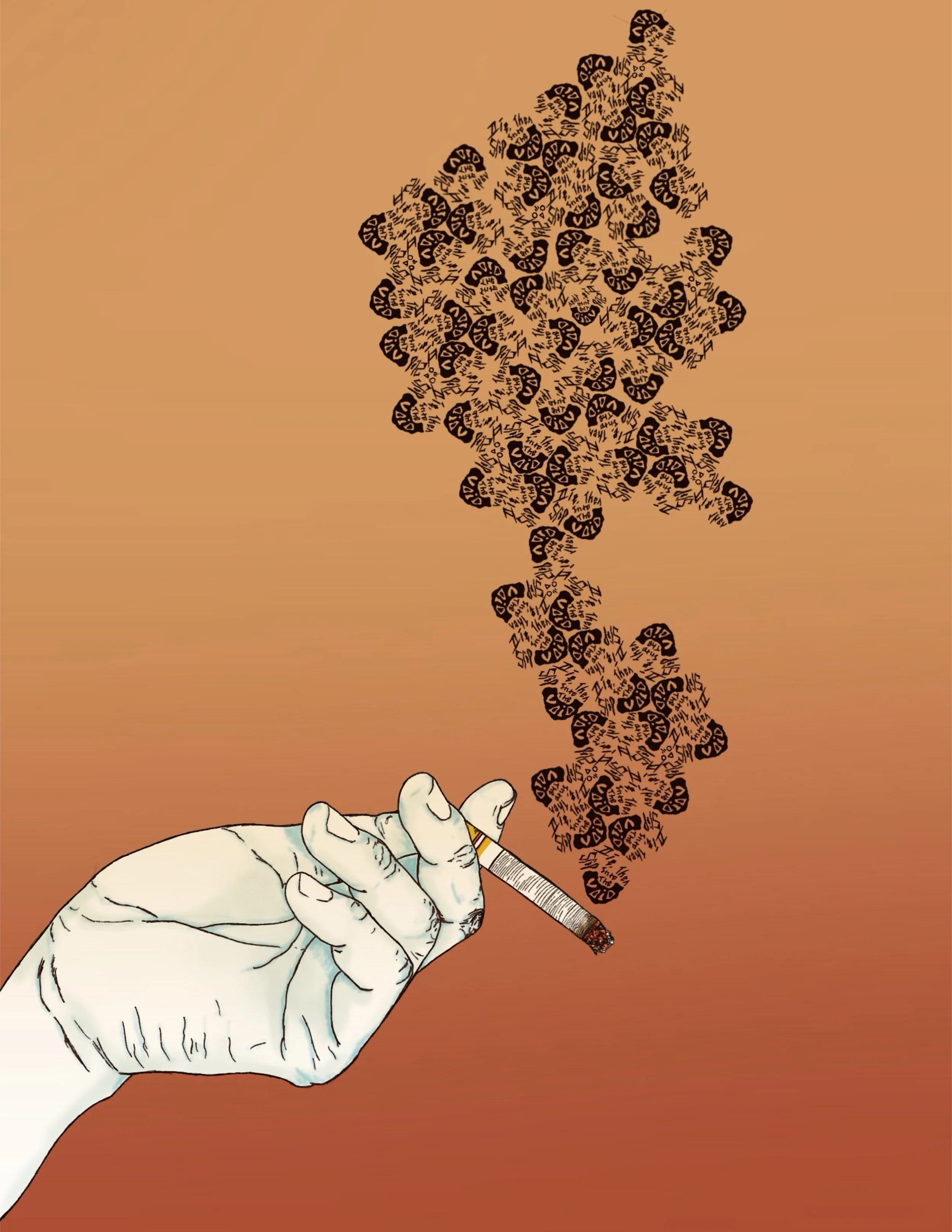
“Die, then slip into the Void”
Slip captures resignation in its quietest, most intimate form. A single hand holds a lit cigarette, steady and unhurried, as if the decision has already been made long before this moment. There is no panic here. The cigarette burns down slowly, marking time in ash and embers.
From its tip, smoke rises and curls into words: “Die, then slip into the Void.” The text does not shout or demand; it drifts upward, soft and persistent, mirroring the way these thoughts settle in after prolonged struggle. What was once resistance has thinned into acceptance. The smoke’s impermanence contrasts with the permanence of its message, suggesting how casually destructive ideas can feel once they’ve become familiar.
In Slip, smoking becomes a metaphor for surrender. It is not as a dramatic act, but as a slow agreement with disappearance. Each inhale represents a step closer to letting go. Closer to choosing erosion over endurance. The piece speaks to the exhaustion of fighting the Void for too long, and the dangerous comfort found in the idea of no longer having to try. It is the moment where giving up no longer feels like defeat, but like rest.
Still Standing
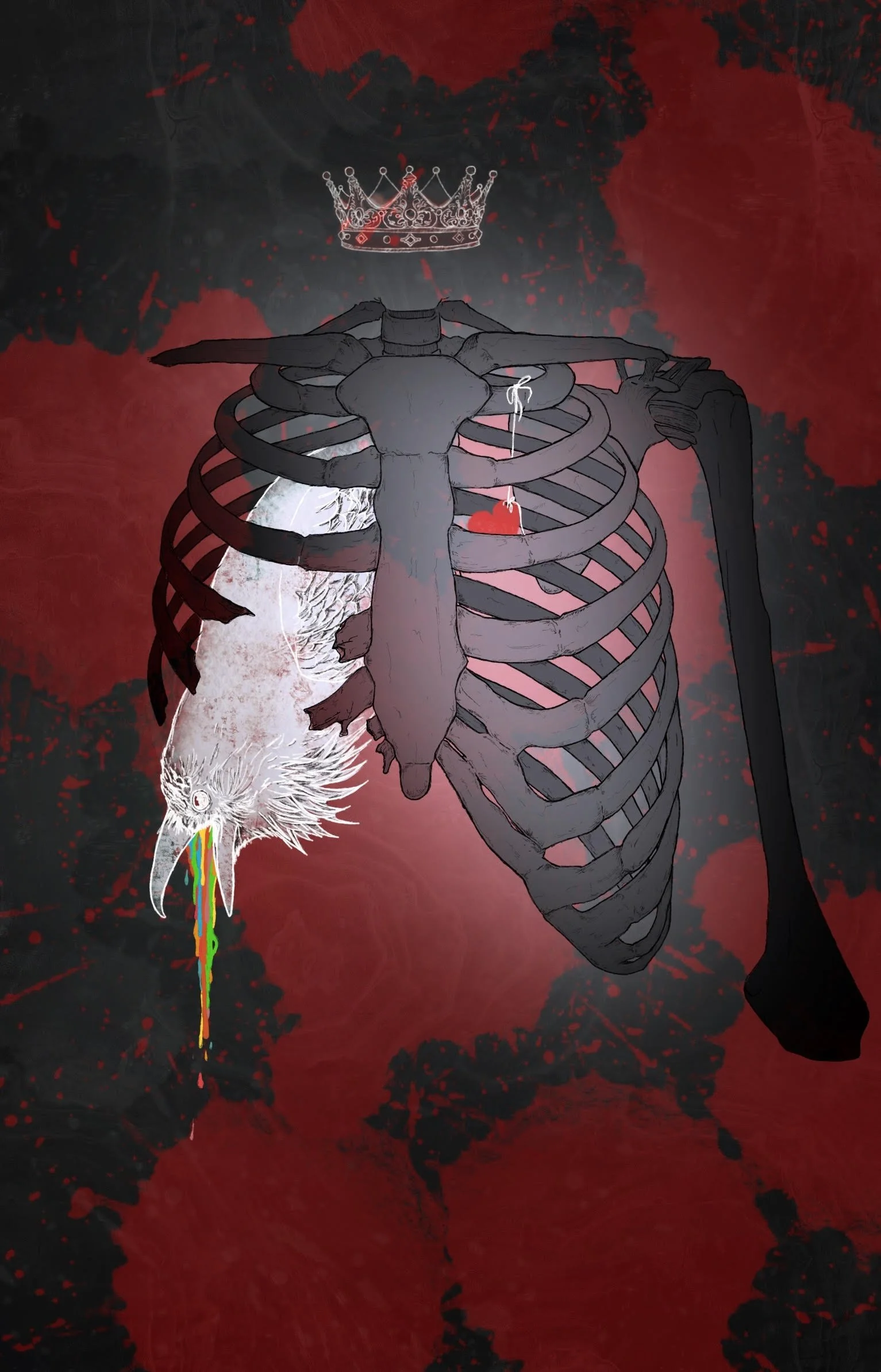
Still Standing serves as the closing statement of The Void. Not a triumph, but a testament.
At its center stands an exposed ribcage, fractured and incomplete, with several ribs broken away. From the rupture in the ribs emerges a raven, forceful and urgent, expelling color into an otherwise muted space. The raven embodies the compulsions that refuse to be silenced. A creative impulse, emotional urgency, or the raw need to self-express and continue.
Above the ribcage floats the ghost of a crown, dulled and stripped of its former shine. Once a symbol of control, confidence, and identity, it now lingers in a weakened state, no longer anchored, yet not entirely gone. It suggests that while the Void may erode one’s sense of self, it does not always succeed in removing it completely.
Inside the ribcage, a small heart hangs by a thin string, deliberately placed rather than naturally held. It appears fragile and exposed, tethered with care rather than certainty. The string represents a conscious effort to preserve hope and positive feeling. Imperfect, but intentional.
Still Standing acknowledges the cost of enduring the Void. It leaves you fractured, diminished, and altered. Yet the piece insists on one final truth: even stripped to bone, with identity dulled and the heart barely held in place, continuation remains possible. Survival here is not about wholeness—it is about refusal to disappear.